

Health and Environment
OUR PHILOSOPHY
For us, wine quality comes first and foremost from respect for the land that produces it. We work with air, water, earth, and fire as parts of a single balance, and we use technologies that allow us to minimize chemical intervention, keeping both the wine and the environment clean and genuine.
ENVIRONMENT
“Mens sana in corpore sano”, all conscientious winemakers can only translate into “healthy grapes in a healthy environment”.
Like all successful wineries that have been active for decades and want to continue to be so for a long time in the future, we have always set up our production cycle striving for high quality in our wines and efficiency in our production processes, with the utmost respect for the environment in which we operate and its four elements.
THE FOUR ELEMENTS
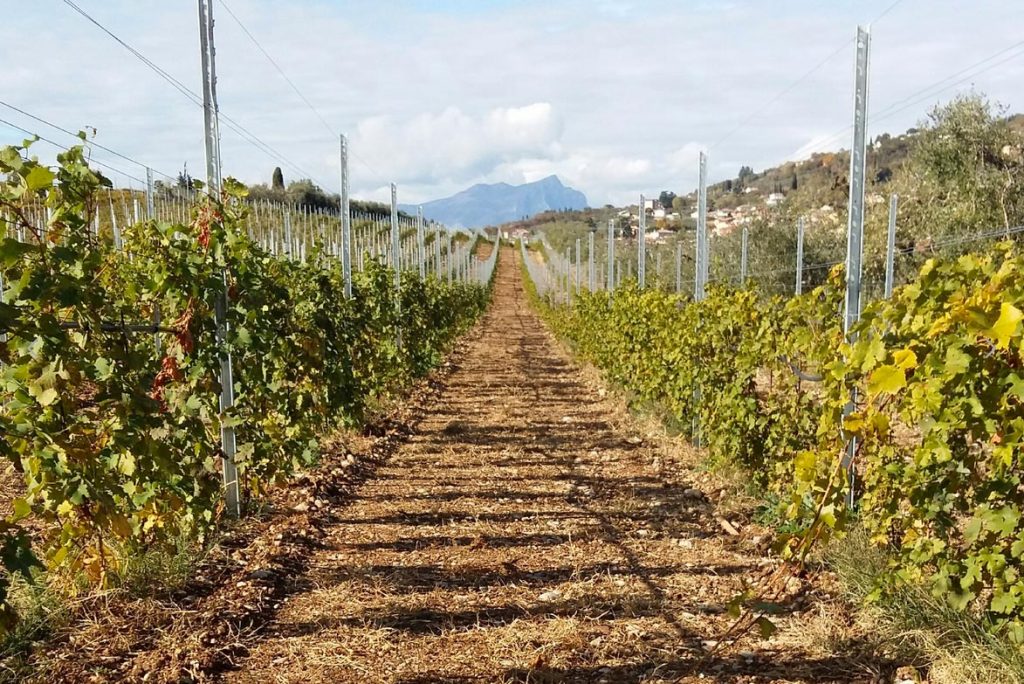
Our environmental policy naturally begins in the vineyard and includes the use of all possible agricultural production techniques aimed at reducing every polluting effect of farming.
Examples of some of the techniques we use are:
- mechanisches Entlauben/Entfernen der Stockausschläge ohne den Einsatz spezifischer Produkte;
- spollonatura meccanica senza l’ausilio di prodotti specifici;
- use of recycling sprayers, thereby drastically reducing the amount of treatment products used;
- leaf stripping of the vineyards to increase air circulation in the vineyards, thus leading to the gradual elimination of antifungal products;
By maintaining an ecosystem that is as natural as possible, we protect the soil and groundwater, our and our employees health, who work in the vineyards and cultivate our finest wines.
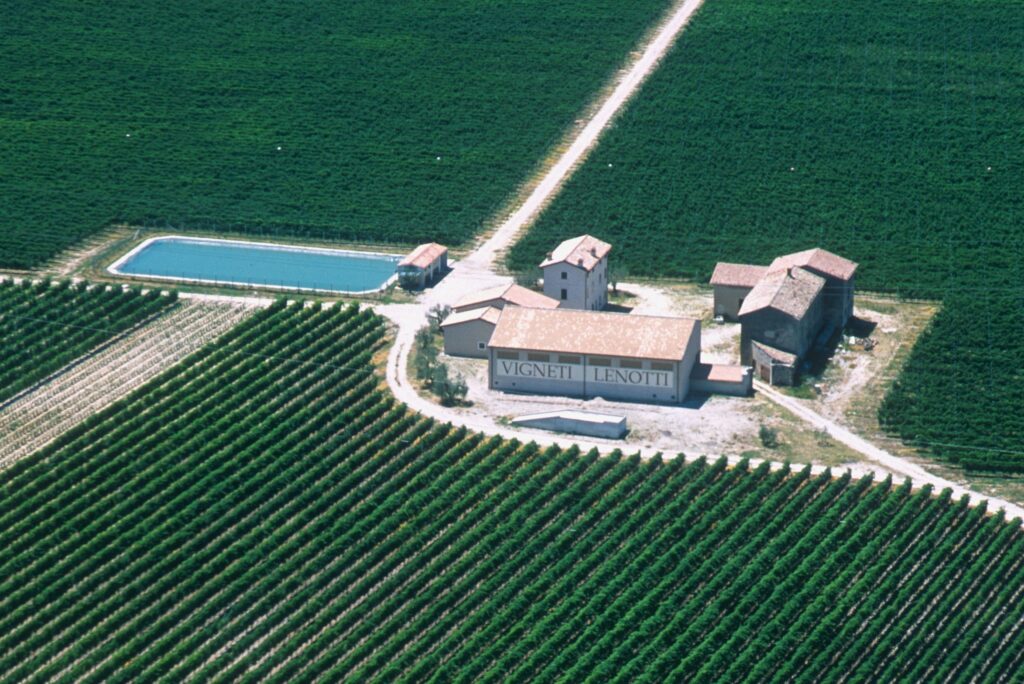
Water is a very precious commodity and a large part of it is used for wine production (from irrigation in the fields to the washing and cleaning in the cellars) and it has always been one of the first natural resources we have taken care of:
- the use of drip irrigation systems in vineyards in order to reduce waste;
- the creation of reservoirs, for collecting and reusing rainwater;
- a controlled treatment of the sewage from the cellar.
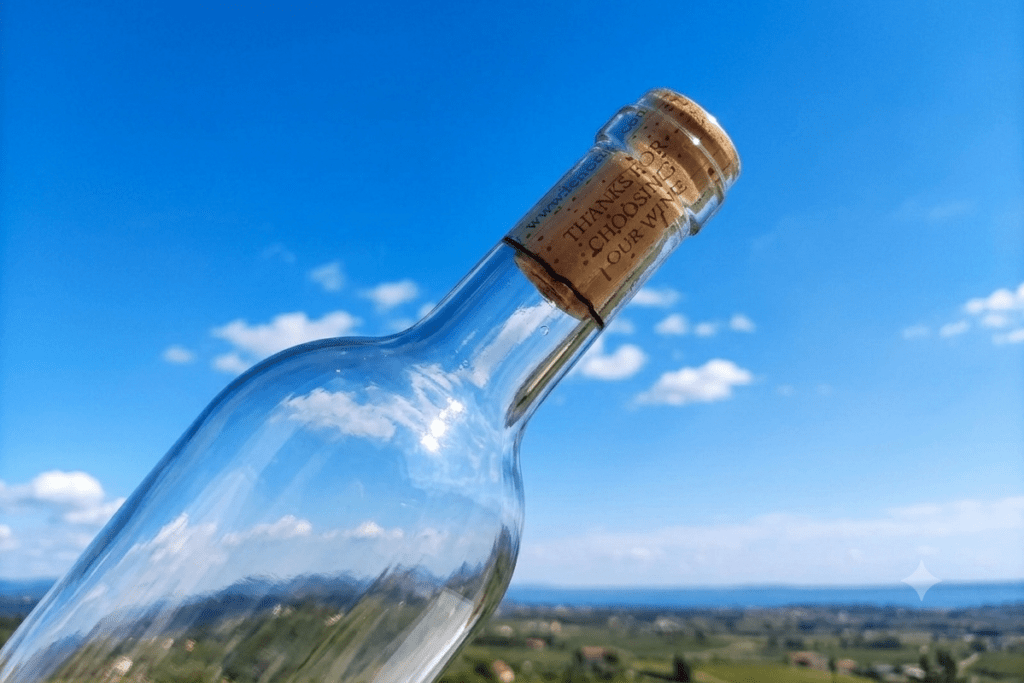
Oxygen is the essential element for life, which is why we pay close attention to CO2 emissions throughout the entire production cycle through:
- use of solar and photovoltaic systems for the production of thermal and electrical energy, exclusive use of "Zero-KM Agricultural Energy" (see "FIRE" element for further details);
- reducing the glass weight of the bottles: the weight of the glass significantly affects CO2 emissions caused by transport, especially long-distance, as well as recovery and disposal operations;
- use of recycled materials for packaging, especially in glass and cardboard.
- The use of the new eco-friendly NOMACORC GREEN LINE closures: 100% recyclable, made from plant-based polymers derived from sugarcane. The production of the compound used to make the closure has a net-positive environmental impact (meaning it helps absorb CO2 rather than produce it). In 2025 alone, we avoided releasing 922 kg of CO2 into the atmosphere (Certificate). For further details, we invite you to visit the manufacturer's pages: www.vinventions.com/it/nomacorc.
- Adherence to the Resily project, a circular economy program based on the recovery and recycling of original adhesive label waste materials to create new labels. In 2025 alone, we collected 4.08 tons of waste material, avoiding the emission of 0.77 tons of CO2 into the atmosphere compared to incineration, or 5.66 tons compared to landfill disposal (Certificate)
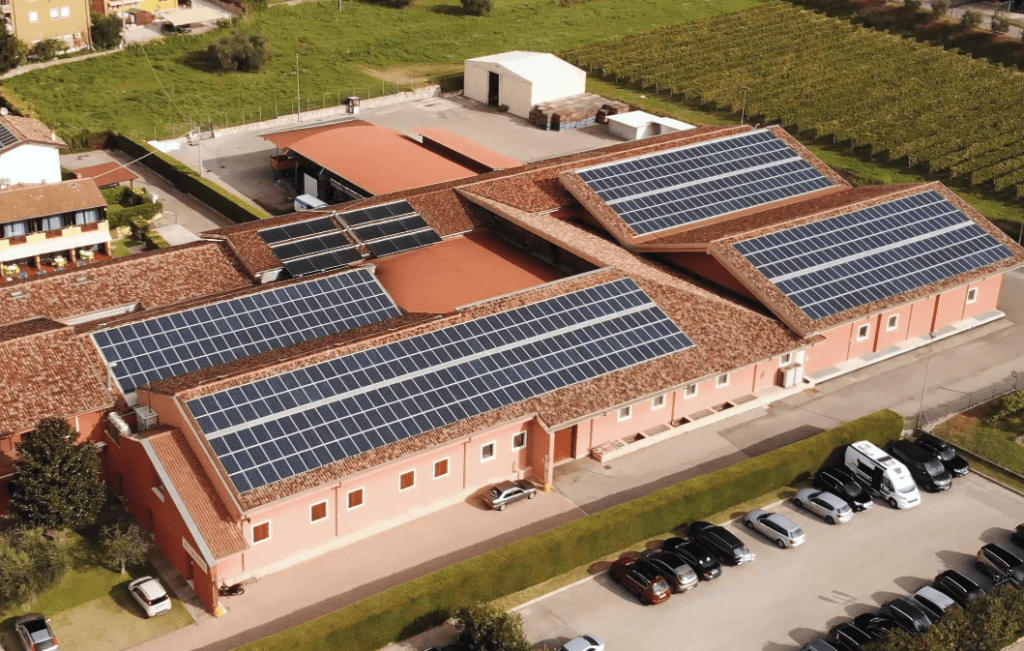
Fire, of course, is meant by us as energy.
In our own wine cellar:
- on our roofs we have solar panels to produce hot water for washing, cleaning, sterilization, and heating, thus avoiding the use of boilers that would consume energy and produce pollutants;
- since 2015, a 161 kWp photovoltaic system has been installed on our roofs; during peak production times, the system is able to cover the company's entire energy needs with full respect for the environment;
- when the electricity produced by our photovoltaic system is not sufficient for our needs, we exclusively use "Zero-KM Agricultural Energy", certified by ForGreen and EKOenergy (see certificate). In this way, we encourage savings in energy transport processes and the resulting reduction of CO2.
- all lighting fixtures have been replaced with LED lamps, which offer lower consumption, longer lifespan, and better performance.
- all our buildings are insulated thanks to high-tech insulating materials capable of eliminating potential heat loss;
- the cellar rooms intended for aging, which require lower temperatures than normal ambient ones (12-14° C), have been built underground, minimizing the need for cooling.
HEALTH
Another fundamental aspect for us is the genuineness of our products and respect for the fruit that mother nature offers us. For this purpose, we make use of the most advanced production technologies, all aimed at improving the wholesomeness and originality of our wines and eliminating any chemical product or agent in the production processes.
TECHNOLOGY
"Thanks to state-of-the-art winemaking and bottling plants, we are able to keep the wine genuine while reducing sulfur dioxide well below standard cellar levels."
~ 50 mg/l
AVERAGE TOTAL SULFUR DIOXIDE IN OUR WINES
In the corked bottle, including the space at the neck, our wines register oxygen levels of 0.4-0.5 p.p.m. and free SO2 levels at 8-10 mg per litre, with a total SO2 content of 40-60 mg. per litre. This is possible as in our wines the oxygen content does not increase during the various stages of vinification and bottling.
All of this guarantees a long life for the wine, preserving all its typical and original characteristics, all primary aromas, and all bouquets.
Learn more:
The role of oxygen and SO2
- The role of oxygen: It is essential during fermentation to nourish the microflora that transforms sugars into alcohol. Once fermentation is complete, however, it becomes an enemy that oxidizes and alters the wine.
- Function of sulfur dioxide SO2: It serves as a preservative (stops bacteria) and as an antioxidant (blocks oxygen).
- Health risks: SO2 concentrations exceeding 100 mg/liter cause side effects such as headaches, stomach pain, hyperacidity, and alterations in intestinal flora.
- Company goal: Reduce oxygen levels during the post-fermentation stages (storage, aging, bottling) in order to minimize the use of SO2.
- Method and technology: continuous oxygen monitoring throughout the entire production chain (tanks, filters, refrigeration, filling machine, and bottle pre/post corking) using a high-precision instrument with readings expressed in ppm (parts per million) and ppb (parts per billion).
Production technology - Winemaking and bottling
For winemaking, we have gone from the 150 mg/liter used in the past to just 50 mg/liter. We achieve this by working only with well-clarified musts, using selected yeasts, and precisely controlling the temperature during fermentation.
During the storage and aging phase, we keep the wine sterile and at a low temperature, successfully stabilizing total sulfur dioxide between 40 and 60 mg/liter and oxygen at extremely low levels (0.4-0.5 ppm). To prevent the wine from absorbing air when moving it, we use volumetric pumps and fill the tanks with inert gases (a mixture of nitrogen and carbon dioxide) that create a protective barrier over the liquid.
Infine, l’imbottigliamento sterile a freddo è il passaggio più delicato per garantire che il vino rimanga buono nel tempo:
Absolute hygiene: Every day we sterilize the entire bottling line and filters with steam at 120 °C, and wash the bottles with sterile water.
Tight filtration: The wine is cold-filtered using ultra-fine membranes (0.4 microns) that trap any bacteria or yeast prior to filling.
Zero oxygen: We use custom-designed machinery that bottles and corks the wine without allowing even the slightest trace of oxygen into the bottle.
Electrodialysis
For tartaric stabilization, we have abandoned the old cold treatment method — now a thing of the past — to switch to electrodialysis, an innovative and precise technology for any type of wine.
How it works:
Instead of cooling the wine to crystallize tartrates (an uncertain process hindered by factors such as colloids, polyphenols, or alcohol), electrodialysis works at room temperature using an electric field and selective membranes.
The membranes do not filter the wine, but serve only to allow the liquid to flow while passing through an electric field.
This electric field selectively attracts and extracts tartrate, potassium, and calcium ions (something the old cold treatment method could not do).
The process is fully measurable and programmable by our oenologist based on the desired level of stability.
The wine requires no special treatments before the process, nor fining afterwards.
All the benefits for the wine and the environment:
Intact quality and taste: By working at room temperature, the wine's original color, structure, colloidal integrity, and aromas remain perfectly unchanged.
Guaranteed result: Tartaric stability (and partially calcium stability) is 100% reliable for every type of wine.
Sustainability: It is a low environmental impact process that guarantees significant energy savings compared to the continuous cooling of large tanks.